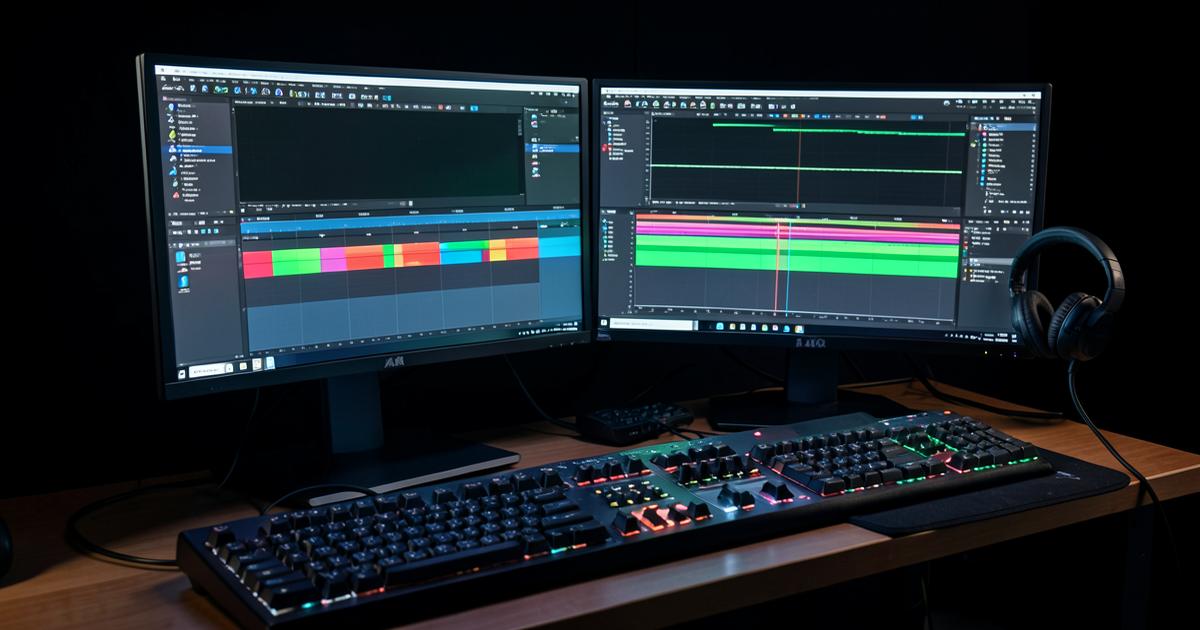
Blackmagic gives away a tool that grades feature films. That fact is so odd that people assume there must be a catch — a watermark, an export cap, a nag screen. There is not. The catch is that Resolve expects you to learn how a post-production facility works.
Seven pages, one workflow
Resolve splits work into pages: media, cut, edit, Fusion, colour, Fairlight, deliver. Once that clicks, it is a genuinely efficient way to work — you are never hunting for a colour tool inside an editing panel. Before it clicks, it is disorienting.
The Cut page deserves special mention for fast turnarounds: it is built for getting a rough edit out quickly and is the fastest way to assemble a talking-head video I have used.
Colour is the reason professionals are here
Node-based grading, proper scopes, tracking that actually holds, and HDR tools most people will never need. Nothing in the consumer or prosumer market comes close, and the free version includes almost all of it.
- Primary and secondary correction with unlimited nodes
- Power windows with reliable tracking
- Colour management that keeps footage from mixed cameras consistent
- Film emulation looks that do not require third-party plugins
Audio without leaving the app
Fairlight is a full digital audio workstation inside the editor. Dialogue levelling, noise reduction, EQ and mastering to broadcast loudness standards all happen without exporting anything. For a solo creator this removes a whole application from the workflow.
The hardware tax
Resolve wants a dedicated GPU. On a modest laptop, 4K timelines need proxies and patience. Budget the money you saved on the licence towards RAM and storage — that is where the real cost sits.
Verdict
Two weeks of learning buys you a professional post-production suite for nothing. For social clips, CapCut is faster. For anything you want to look properly finished, Resolve is the best value in creative software — and it is not close.