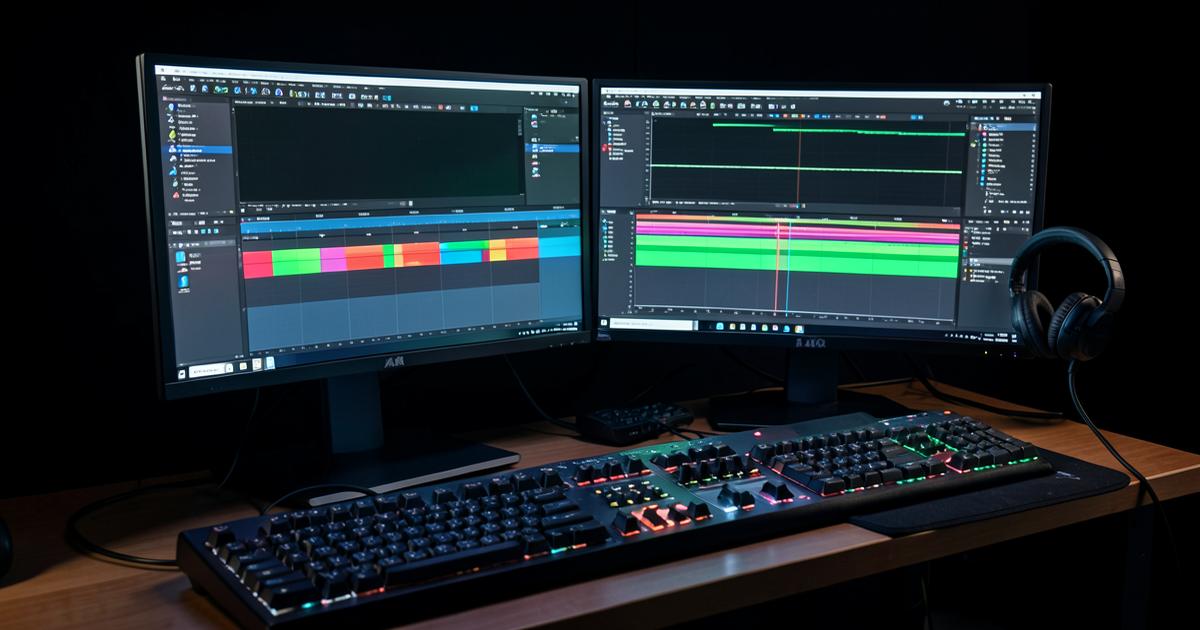
Editing a two-hour interview traditionally means scrubbing a waveform and listening for the good bits. Descript's premise is that you already know how to edit text, so it transcribes everything and lets you delete sentences. Cut the words, the video cuts with them. It is a small idea with a very large effect on how long a podcast takes to finish.
The workflow in practice
I edited three interviews and four podcast episodes. On average, the first pass took about 40% of the time the same job takes in a conventional timeline, mostly because finding a moment is a text search rather than a hunt.
Removing 'um' and long pauses across an entire episode is one command. On a rambling recording that alone saves twenty minutes and makes the guest sound sharper than they were.
Audio repair
Studio Sound takes a recording made in a hard-surfaced room with a laptop microphone and produces something that sounds like it came from a podcast studio. It is not magic — clipping stays clipped — but it has rescued material I would otherwise have re-recorded.
- Filler-word removal: accurate, occasionally over-eager
- Studio Sound: dramatic improvement on echoey rooms
- Multitrack editing keeps separate speaker tracks clean
- Auto-generated social clips are a genuine time saver for promotion
Where it is the wrong tool
Anything where picture matters more than speech. Colour work, complex effects and precise motion are not what this is for, and trying to force it wastes the advantage.
The AI voice question
Descript can generate speech in a cloned voice to patch a mistake. It works well and it needs a rule attached: only with the speaker's explicit consent, and never to put words in a guest's mouth. Handle that badly once and the trust cost outweighs any editing convenience.
Verdict
For interview and podcast production, Descript is the biggest single time saver in the category, and the Creator plan is easy to justify if you publish weekly. Keep a real editor around for anything that has to look cinematic.